How to test a faulty brake light switch quickly
 Mar 05 , 2026
Brake lights are a crucial component of a vehicle's safety system, signaling your intention to slow down to vehicles behind you and preventing rear-end collisions. However, brake light malfunctions are often overlooked by car owners. Statistics show that approximately 30% of rear-end collisions are related to brake light failure, and 80% of these problems can be resolved by the car owner themselves.
As a professional automotive parts manufacturer, Ouri is committed to providing car owners with high-quality brake light switches and professional troubleshooting guides. Our products are quality certified to ensure your driving safety.
Identifying Malfunction Symptoms: Common Signs of Brake Light Switch Failure
Before performing troubleshooting, we need to identify the common symptoms of brake light switch failure:
- Brake Lights Remain On: Brake lights stay on even when the brake pedal is released. This may be caused by a stuck or misaligned brake light switch.
- Brake Lights Not Working: Brake lights do not illuminate at all when the brake pedal is pressed. This may be caused by a faulty brake light switch, blown fuse, or damaged bulb.
- Flickering Brake Lights: Brake lights flicker on and off, which may be caused by poor contact in the brake light switch or loose wiring.
- Unable to Shift Gears: In automatic transmission vehicles, it is impossible to shift from P (Park) to other gears. This may be caused by a faulty brake light switch leading to failure of the shift lock system.
- Cruise Control System Failure: The cruise control system does not work properly or cancels unexpectedly. This may be caused by abnormal signals from a faulty brake light switch.
Quick Testing Methods: Three-Step Self-Inspection
For most vehicle owners, you can quickly detect brake light switch malfunctions using the following three-step self-inspection method:
Step 1: Check Bulb Condition
Turn on the ignition and have someone observe the brake lights from behind the vehicle while you press the brake pedal. If only one brake light does not work, it is likely that the corresponding bulb is burned out. If both brake lights do not work, further inspection is required.
When replacing bulbs, ensure model compatibility. Most vehicles use 1157 dual-filament bulbs. The replacement steps are: open the corresponding tail light cover or assembly, remove the old bulb, install the new bulb, and test the lights.
Step 2: Check Fuse Condition
Open the vehicle's fuse box and locate the fuse corresponding to the brake lights (usually labeled "STOP" or "TAIL"). Check if the fuse is blown. If the fuse is blown, replace it with a fuse of the same rating (usually 10A or 15A). If the fuse blows again after replacement, it indicates a short circuit in the circuit, requiring further inspection of the wiring.
Step 3: Check Brake Switch Function
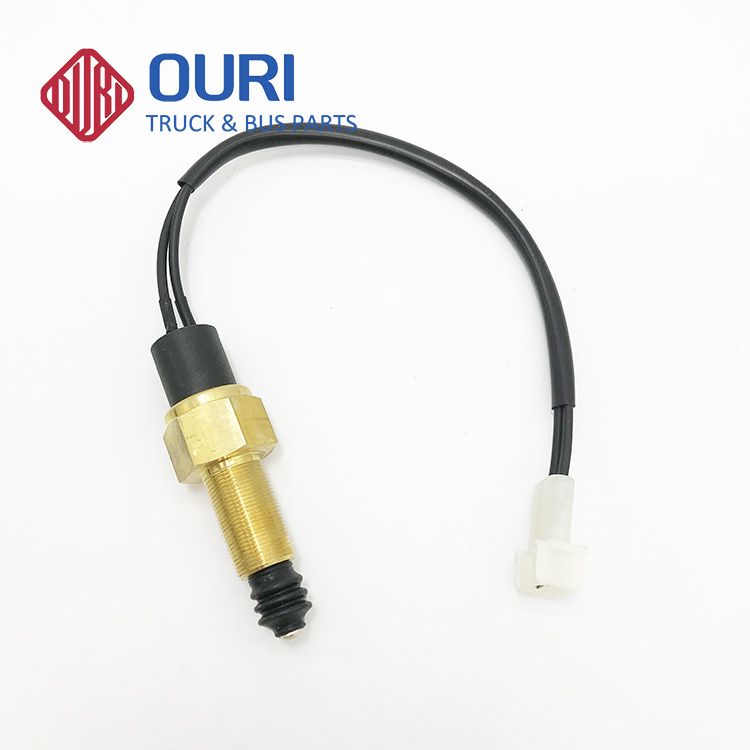
The brake switch is located above the brake pedal and should make a "click" sound when the pedal is pressed. Self-inspection methods include:
- Feel the Position: Ensure the switch is installed correctly.
- Listen for Sound: Check if there is a normal switch sound when the pedal is pressed.
- Test Function: You can test by shorting the switch plug. If the brake lights illuminate, it indicates the switch is faulty.
If the switch is oxidized or damaged, it needs to be replaced. Some vehicles require position adjustment after replacement.
Professional Testing Methods: Precise Detection Using Tools
For more precise fault detection, you can use the following professional testing methods:
- Multimeter Continuity Test:Set the multimeter to continuity mode, disconnect the wiring harness from the brake light switch, and touch the two probes of the multimeter to the two terminals of the switch. When the brake pedal is pressed, the multimeter should emit a beep sound, indicating circuit continuity. When the brake pedal is released, the beep should stop, indicating circuit disconnection.
- Voltage Test:Set the multimeter to voltage mode, touch the red probe to the power terminal of the brake light switch, and the black probe to the ground terminal. After turning on the ignition, the multimeter should display a voltage of approximately 12V. When the brake pedal is pressed, the multimeter should display a voltage close to 0V, indicating the switch is working properly.
- Scan Tool Diagnosis:Use a professional automotive diagnostic scan tool, connect it to the vehicle's OBD interface, and read the data stream of the brake light switch. When the brake pedal is pressed and released, the data stream should show corresponding changes.
Ouri Product Advantages: Choosing High-Quality Brake Light Switches
As a professional automotive parts manufacturer, Ouri brake light switches offer the following advantages:
- Quality Certification: Passed quality certifications, ensuring stable and reliable product quality.
- Long-Life Design: Uses high-quality materials and precision manufacturing processes to ensure longer product service life.
- Precise Matching: Strictly designed and manufactured according to original factory standards to ensure perfect matching with vehicles.
- Comprehensive Warranty: Provides a 13-month product warranty and 24/7 after-sales service, giving you peace of mind.
Comparative Experiments: Performance Comparison Between Ouri Products and Competitors
To verify the performance advantages of Ouri brake light switches, we conducted a series of comparative experiments:
- Durability Test: In simulated brake pedal pressing tests, Ouri brake light switches achieved a service life of over 50,000 cycles, which is more than 30% higher than competitors.
- Stability Test: In high-temperature, low-temperature, and humidity environments, Ouri brake light switches maintained stable performance, while competitors showed varying degrees of performance degradation.
- Reliability Test: In continuous power-on tests, the failure rate of Ouri brake light switches was only 0.1%, significantly lower than the 1.5% failure rate of competitors.
Call to Action: Choose Ouri for Driving Safety
If your vehicle experiences brake light switch malfunctions, do not ignore this safety hazard. By choosing Ouri brake light switches, you will get:
- High-Quality Products: High-quality brake light switches that have passed strict quality certifications.
- Professional Service: 24/7 after-sales service and professional technical support.
- Comprehensive Warranty: 13-month product warranty, giving you peace of mind.